Family owned 50+ years Licensed MD, DC & VA 24/7 Emergency Service

MTB Pest Control provides termite treatment, prevention programs, monitoring, inspections, and long-term termite protection services throughout Silver Spring, Maryland, and nearby communities.
Finding termites is only half the battle. Eliminating active termite activity and preventing future infestations is what protects the long-term value of your home. MTB Pest Control provides termite treatment, prevention programs, monitoring, inspections, and long-term termite protection services throughout Silver Spring, Maryland, and nearby communities.
Many homeowners don't discover termites until damage has already begun. By the time mud tubes appear on foundation walls or wood begins to feel soft, termites may have been active for months or even years. Effective termite protection requires more than simply treating visible activity. It requires identifying how termites entered the structure, addressing conducive conditions, and creating a long-term prevention strategy.
Whether you recently discovered termite activity, are purchasing a home, or want to reduce future risk, MTB Pest Control helps homeowners throughout Silver Spring understand treatment options, prevention methods, and monitoring programs designed to protect their investment.
Termite treatment typically involves liquid soil treatments, bait systems, targeted applications, inspections, monitoring, and correction of conditions that attract termites. Long-term prevention often includes moisture management, eliminating wood-to-soil contact, regular inspections, and ongoing monitoring.
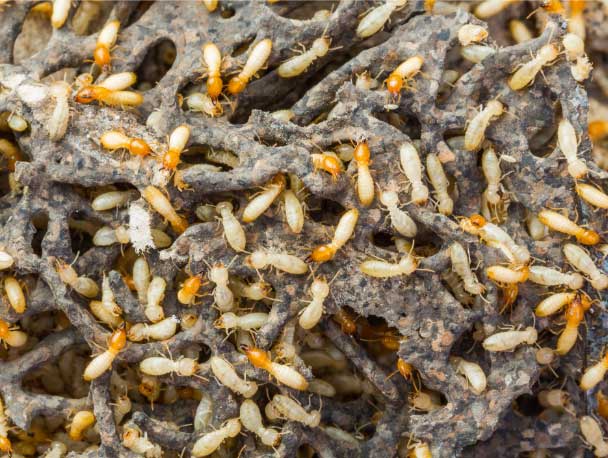
Termites never voluntarily stop eating. If active colonies remain untreated, structural damage can continue to spread throughout framing members, support beams, flooring systems, trim, decks, and other wood components.
Liquid barrier treatments remain one of the most common and effective termite treatment methods for many residential structures.
A liquid treatment is typically applied to soil around the structure to create a treated zone that termites encounter as they move between the colony and the structure. Depending on the situation, treatment may involve trenching, drilling, targeted applications, or a combination of methods designed to protect vulnerable areas.
Liquid barrier systems can be especially effective when termite activity has already been confirmed and immediate protection is needed. Every property is different, which is why treatment recommendations should be based on construction type, soil conditions, landscaping features, foundation design, and the location of termite activity.
Termite prevention is about reducing the conditions that make a home vulnerable. Even after active termite treatment, a property can remain at risk if moisture, wood-to-soil contact, foundation gaps, or untreated structural vulnerabilities remain.
MTB Pest Control helps Silver Spring homeowners understand the difference between stopping active termites and reducing future termite risk. Treatment addresses the current problem. Prevention focuses on keeping the home from becoming an easy target again.
Prevention may include ongoing monitoring, moisture correction recommendations, removal of wood debris, mulch adjustments, improved drainage, sealing entry points where appropriate, and routine inspections around the foundation, basement, crawl space, porch, deck, and exterior wood components.
Damp soil, plumbing leaks, poor drainage, clogged gutters, and basement humidity can create conditions termites prefer.
Deck posts, porch framing, stored lumber, fence lines, and mulch against siding can increase termite risk.
Regular termite monitoring helps identify activity early before damage spreads through hidden structural areas.
Silver Spring homes often have mature landscaping, shaded lots, older foundations, basements, additions, porches, decks, and moisture-prone areas. Those conditions can create termite pressure around the structure.
Older homes may have construction details that allow termites to move into hidden areas before they are noticed. Finished basements can hide activity. Deck and porch attachments can create access points. Mulch and soil near siding may conceal termite travel routes. Add water and time, and nature once again proves it has no respect for remodeling budgets.
That is why termite prevention should be treated as a property protection strategy, not just an emergency reaction. Silver Spring homeowners in ZIP codes 20901, 20902, 20903, 20904, 20905, 20906, and 20910 should pay close attention to moisture, drainage, wood storage, foundation cracks, and landscaping around the structure.
Learn more about termite pest control in Silver Spring or request help through MTB’s contact page.
Homeowners can also review termite guidance from the EPA termite control guide and the University of Maryland Extension termite resource.
The best termite treatment depends on the structure, termite activity, soil conditions, foundation type, moisture level, and long-term risk. Some homes benefit from liquid barrier treatments, while others may require monitoring systems or a combination approach.
Termite treatment can reduce current activity and help protect the structure, but long-term prevention also depends on correcting moisture problems, reducing wood-to-soil contact, monitoring the property, and scheduling regular inspections.
Many homes should be inspected annually, especially if the property has prior termite activity, basement moisture, heavy landscaping, decks, crawl spaces, or wood components near soil.
Bait systems can be useful for monitoring and termite management when properly installed and maintained. They may be recommended depending on the home, activity level, soil conditions, and prevention goals.
Termites are often attracted by moisture, wood-to-soil contact, mulch against siding, stored lumber, foundation cracks, poor drainage, leaking pipes, damp crawl spaces, and untreated wood debris near the home.
If termite activity or damage is present, treatment and documentation may help reduce delays during a sale. Many real estate transactions also involve Wood Destroying Insect inspections or termite-related repair negotiations.
If you have seen termite activity, mud tubes, damaged wood, discarded wings, or moisture conditions around your home, contact MTB Pest Control for termite treatment and prevention services in Silver Spring, MD.